GLP1s as a tool for managing type 1 diabetes


It’s hard to avoid the GLP-1 craze these days. Over half my friends are on a GLP-1 or have tried one, and those are just the ones who have outright admitted to it (I suspect a number of people are closet GLP-1 users).
I never considered using a GLP-1. First of all, I am a type 1 diabetic, and I had heard for a long time that GLP-1s were contraindicated for use among this group. Second, I don't really have much weight to lose; according to the scale, I am only slightly into the "overweight" category. Doctors have never suggested I try to lose weight. While my cholesterol is borderline high, all my other blood work has been pretty good for someone who has had type 1 diabetes for such an extended period of time.
However, about a year or so ago I started hearing stories of type 1 diabetics using low-dose GLP-1s to reduce insulin resistance and therefore insulin use, stabilize blood sugar levels, and potentially stave off long-term cardiovascular and microvascular complications that often feel inevitable when you have type 1 diabetes.
To be clear: GLP-1s cannot treat type 1 diabetes they way they treat type 2 diabetes; they cannot replace our need for daily injections or infusion of external insulin. But GLP-1s have shown real promise in making type 1 diabetes easier to manage, with potential longer-term benefits. (For example, see here, here, here, and here.)
So when I heard this podcast episode of Diabetech in August 2025, I decided to bring this up to my endocrinologist at my next appointment. Turns out she brought it up to me before I could even ask.
There were a few things happening that made me decide to discuss this with my endocrinologist.
Despite decades of being referred to as "extremely insulin sensitive" by endocrinologists (meaning that my body was very sensitive to the insulin I took and my insulin dosage was generally very low), middle age was bringing on the predicted insulin resistance that many T1s experience. As I work my way through my 40s and get closer to menopause, hormonal shifts are the primary cause of this increased insulin resistance, but so is aging generally. This shift has caused my total daily dose (TDD) to rise slowly over time, from about 30-35 units a day to more than 60 units per day. This increase made me uneasy, especially because I love the Omnipod and the pods only hold a total of 200 units for 3 days. Nearing close to the maximum capacity of my pods made me realize that I might have to consider another pump, which I don't want to do.
Additionally, while not significantly "overweight," I would love to lose about 10 pounds, particularly around my waist where it has stubbornly sat since I was last pregnant. As a small person, any little bit of extra weight feels burdensome. Having my clothes fit a little better would be a win for me. Losing extra weight would also help prevent additional insulin resistanc
Finally, I was really eager for some better blood sugar control. DIY closed looping has been fantastic for me, but in the last year or so I've noticed Loop, even with the most aggressive settings, often struggles to keep up with my post-meal, pre-menstrual, and stress-induced spikes. I was starting to regularly see numbers in the 200s and even 300s sometimes, despite diligent carb counting and attention to basal and correction settings. My A1C was good, but my Dexcom graph was filled with peaks and valleys some days.
My endocrinologist agreed that a low-dose GLP-1 could potentially help with all of these issues and was worth trying.
Starting Mounjaro
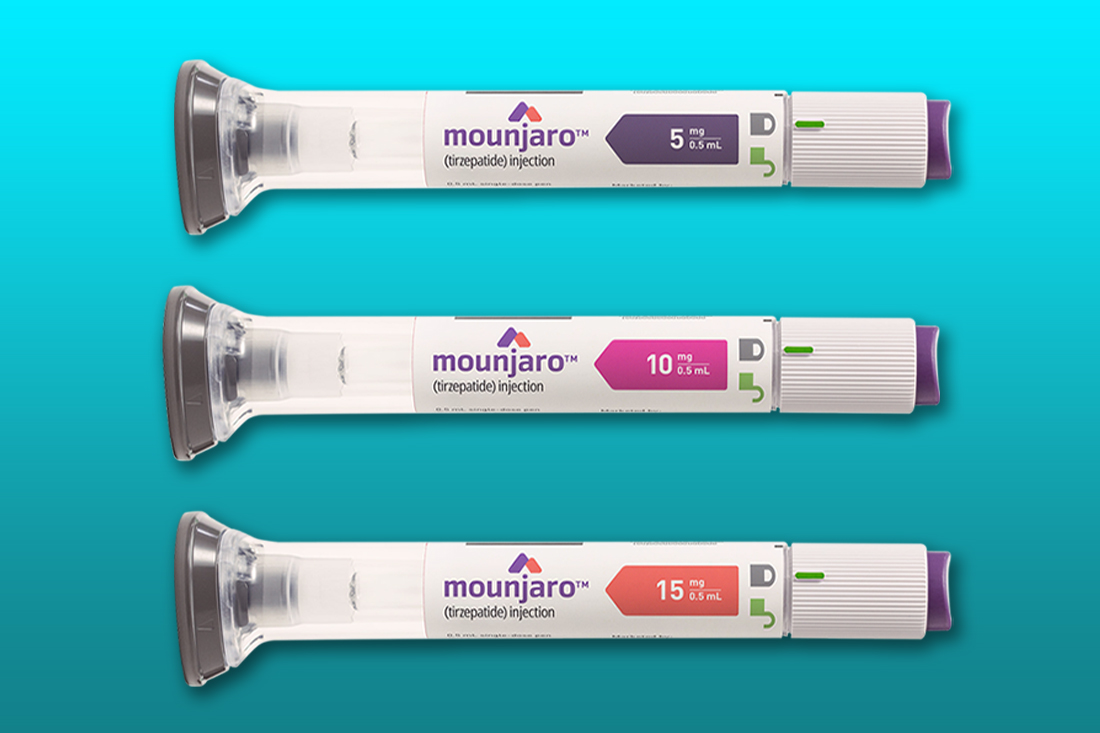
My endocrinologist prescribed Mounjaro (tirzepatide), both because it is covered by my insurance plan and has been studied to some extent in the T1 population. Unlike Ozempic (semiglutide), Mounjaro is a dual-action medication, both a GLP-1 and GIP receptor agonist. Tirzepatide is better for blood sugar control and stabilization, and has some reduced risk of certain side effects.
I started taking 2.5mg of Mounjaro weekly at the beginning of the year. To put it bluntly: this drug has been an absolute miracle for me.


Within hours of taking the first dose, my blood sugar came down and stayed down. No matter what I ate during that first week, post-meal spikes never came. I was definitely eating a bit less, so I am sure that helped, but food just wasn't having the same effect on my body. Boluses were working better and faster. My Dexcom graph flattened out considerably without changing anything else.
During the first 10 days, my total daily dose steadily decreased, settling in back at around 35 units per day. That is a nearly 50% reduction in the amount of insulin I had been using. Basal settings and I:C ratios all had to be decreased. It felt so good.
Diabetes wise, this was the stuff of gods. I found myself stressing less about what I was eating or when I was eating it, looking at my Dexcom less, getting less high alerts (although there were definitely more low alerts!). Meals were less stressful; I stopped doing all the anxiety-riddled mental math to try and figure out how something was going to affect my blood sugar as I prepared my meal.
But there were other things that happened that were strange and wonderful, things I can only attribute to the Mounjaro.
For about 2 years prior to starting Mounjaro, I had been dealing with sacroiliitis, an inflammation of the sacroiliac joints (where the lower spine connects to the pelvis). This was confirmed on an MRI, and there weren't really good solutions for it. Stretching, ibuprofen, and steroid injections were all options, but the bigger concern was the underlying cause of the sudden inflammation. Infection was ruled out and it was surmised that an autoimmune attack of the joints was occurring, although no clear answers were ever found. While frustrating, the pain wasn't particularly life-altering, so I managed to live with it by taking the occasional ibuprofen or Aleve when the pain got really bad. But after 2 years of living with this pain, it was noticeably better within a few days of my first Mounjaro injection. With each injection, the pain was reduced a little more and by my fifth infection, the pain was GONE. JUST GONE.
Another issue that resolved within 2 weeks was eczema that I have had on the back of my neck for about 20 years. This was never a huge issue, although it could get quite itchy and gross in the winter months. However, after 2 shots of Mounjaro, the eczema that had been there for two decades was GONE.
There were other noticeable changes too. My period cramps were greatly reduced, almost unnoticeable, and my PMS symptoms were drastically better.
I also found that I had more energy, likely the result of having more stable blood sugar. Whereas before I was WIPED by about 7:00 PM, now I have energy right up until I go to bed. And this happened even though I was craving and drinking coffee less (another interesting surprise; I still like my coffee, but don't find myself reaching for it midday the way I used to).
Finally, I have noticed that I am just a calmer overall person. I have always been a somewhat high-strung kind of person, and low-level anxiety has been something I've dealt with all my life. However, on Mounjaro, I feel less anxious, less apt to get angry quickly. It's not a huge difference and not something that I think anyone other than me has noticed, but it's a definitely change.
Going Forward
At this point, I plan to stay on a GLP-1 for the foreseeable future. I will likely stay on this low 2.5mg dose. I do not have any side effects and only stand to benefit from the reduced risk of cardiovascular disease and microvascular complications (both of which T1 diabetics are at a significantly elevated risk for developing). A small amount of weight loss is a nice added bonus.
I hope that other endocrinologists consider this as a tool for managing T1 diabetes. It is another tool in the tool box, along with insulin pumps, CGMs, and closed-loop algorithms, that can help make this disease easier to manage.